A certification is more than a piece of paper. For a personal trainer, it shapes the clients you attract, the gyms that will hire you, the insurance you can buy, and the professional pathways that open for continuing education. Over a decade of hiring and mentoring trainers in commercial gyms and private studios has taught me how these credentials function in practice. Some open doors instantly, others require extra study or field experience to be useful. Below I walk through the most recognized certification bodies, how employers and clients read each credential, what the certifications actually teach, and pragmatic trade-offs when choosing one.
Why the credential matters now Employers look for two things first, a valid certification from a reputable body, and proof of continuing education. Clients typically care about results and safety, but they use certification as a proxy for both. Insurance companies and liability forms will often name acceptable certifying organizations, which makes choice of provider a practical, not just a prestige, decision.
Which certifying organizations matter most Different certs emphasize different strengths: exercise science, strength and conditioning, corrective exercise, or broad general population training. The list below highlights five widely recognized organizations, and what each cert signals about a trainer’s skills and likely career path.
1) National Academy of Sports Medicine (NASM) — known for corrective exercise and program design, often favored by boutique studios and rehab-minded gyms. 2) American Council on Exercise (ACE) — broad, client-focused curriculum with strong public recognition, common in commercial gyms and for group fitness crossover. 3) National Strength and Conditioning Association (NSCA) — more academic and performance-oriented, respected by collegiate, high-performance, and strength-focused facilities. 4) American College of Sports Medicine (ACSM) — medical and research credibility, often paired with clinical or cardiac rehab settings. 5) International Sports Sciences Association (ISSA) — accessible, internationally recognized, practical for trainers working outside the US or in freelance markets.
What each organization teaches and why it matters NASM: NASM’s curriculum is heavily rooted in the Optimum Performance Training model, which emphasizes movement assessments, corrective exercise, and phased program design. If you’re working in a physical-therapy-adjacent environment, or with clients who have chronic pain or postural issues, NASM trains you to identify mobility and stability imbalances, and to build progressive corrective plans. The exam includes applied scenario questions, and certification requires continuing education every two years.
ACE: ACE is client-first. The programs are practical for trainers who will run sessions with diverse populations, from weight loss clients to older adults. ACE places a lot of emphasis on coaching skills, behavior change strategies, and communication, alongside anatomy and program design. Employers in large commercial chains often list ACE among acceptable credentials, and the study resources tend to be approachable for those who learn better with visuals and coaching frameworks.
NSCA: NSCA’s Certified Strength and Conditioning Specialist credential targets those who program for athletes and teams. The science is dense, tests include data interpretation, and practical application focuses on velocity-based training, periodization, and testing protocols. If you want to work in collegiate strength programs or high-performance training, the NSCA carries weight with hiring committees.
ACSM: The American College of Sports Medicine blends clinical research with practical application. Their certifications, particularly the Certified Clinical Exercise Physiologist and Certified Exercise Physiologist, are often required or preferred in hospital-based programs, cardiac rehab, and clinically supervised environments. ACSM leans heavier on physiology and pathology, so trainers who plan to work alongside medical professionals or treat clients with metabolic or cardiac conditions will find this path appropriate.
ISSA: ISSA is modular and flexible, with a strong online presence, and tends to be friendly to international candidates and professionals who are building a freelance base. The content covers the fundamentals, and many trainers appreciate the straightforward study materials and practical tools. ISSA is useful when you need a recognizable credential quickly and plan to emphasize marketing and client acquisition in your business.
How employers and clients perceive these certs Gyms and fitness employers vary. A national chain might accept multiple certs, but they often prefer ones they have relationships with for onboarding. Boutique studios looking for corrective or specialized training will prioritize NASM or NSCA credentials. Medical or clinical settings lean toward ACSM. Independent clients will rarely ask which cert you hold directly, instead they notice coaching skills, confidence, and results. Still, when a client does ask, citing a recognized cert and a handful of successful client examples reduces friction.
Cert nitty-gritty: prerequisites, study load, and cost Expect a range. Entry-level certs usually require a high school diploma or equivalent, CPR/AED certification, and passing a proctored exam. Study times vary from a few weeks for fast learners to several months for those balancing work. Pricing can range from a few hundred dollars for basic packages to over a thousand for premium study bundles, practice exams, and retake insurance. Recertification typically occurs every two to three years and requires continuing education credits, usually 20 to 50 hours depending on the body. Budget for recurring costs, about $100 to $300 every cycle for the recertification fee, plus course costs if you pursue specializations.
Which cert fits different career paths If your goal is to work on the floor of a busy commercial gym, prioritize a cert with broad public recognition and strong employer acceptability, such as ACE or NASM. If your aim is strength and conditioning for athletes, the NSCA is the credential most hiring committees look for. If you want to work in a clinical or hospital environment, ACSM aligns with medical protocols and research standards. For trainers going independent, ISSA and NASM are both common, with NASM providing more depth in corrective strategies and ISSA often marketed for flexibility and business resources.
Specializations and continuing education: how to deepen your expertise Certifications are a starting point, not an endpoint. Most bodies offer specializations in nutrition, corrective exercise, youth training, senior fitness, and more. Taking a corrective exercise course can immediately change the clientele you attract. I once saw a trainer with three months of corrective exercise training double their private client base inside six months, because referrals from physical therapists started appearing. Consider specializations based on Fitness coach demand in your market. In an area with many older adults, senior fitness and fall-prevention credentials pay off. In a college town, strength and conditioning or sports nutrition will be more valuable.
Liability, insurance, and legal considerations A reputable cert makes getting professional liability insurance straightforward. Insurers often require certification from a recognized body and up-to-date CPR/AED. Without insurance, you risk significant personal liability. Check the certifying body's stance on scope of practice. For example, most personal training certs prohibit diagnosing medical conditions or prescribing medical treatments, and they expect trainers to refer clients with complex health issues to appropriate healthcare providers.
Practical hiring signals beyond the cert During interviews and hiring, gym managers look at a combination of certification, experience, client testimonials, and the ability to sell packages. I hired trainers with strong certs but weak sales skills less often than those with moderate certs and a clear history of generating revenue. Some employers train new hires on their internal systems regardless of cert, but they will still check for valid credentials and liability coverage.
A short checklist for choosing the right cert
Define your target client and setting, whether commercial gym, private studio, clinical program, or freelance. Match cert focus to that setting, for example NSCA for athletes, ACSM for clinical, NASM for corrective and boutique work. Consider cost, study time, and recertification requirements, because ongoing expenses affect long-term ROI. Verify employer or insurance requirements in your local market before committing. Plan two years ahead, choose one specialization early, and budget for continuing education credits.Common trade-offs and edge cases Depth versus breadth: Some certs give deep technical knowledge, which is excellent for specialty roles, but less helpful for trainers who need broad coaching and sales abilities. Time to hireability: A faster, more accessible cert gets you working sooner, but you may need additional continuing education to serve complex clients. Geographic variance: International recognition differs, so if you plan to work overseas, pick a body with global reach, such as ISSA or NASM. Clinical crossover: If you want to work inside a medical facility, you may need additional degrees or certifications beyond standard personal training, such as an exercise physiology degree or ACSM clinical credentials.
How to demonstrate competence beyond the certificate Build a brief portfolio. Include client case studies, measurable outcomes, and before-and-after metrics. Use consented client data such as percent body fat changes, strength increases, or performance improvements. A clear narrative about your assessment process, the program you used, and the client’s adherence pattern is persuasive. Employers and clients respond far more to a 12-week transformation backed by documented testing than to a long list of letters after your name.
Preparing for the exam and passing strategies Study smart. Use active learning, not just passive reading. Practice program design with real or simulated clients, take practice exams, and teach concepts to peers, because explaining material reveals gaps. Schedule the exam for a time you can commit two to three months of focused study if you work full-time. Online forums and local study groups help, but prioritize official practice questions to get used to exam phrasing.
What successful trainers do after certification Successful trainers treat the credential as a license to learn, not a final product. They collect client feedback, track key performance indicators, and invest in one or two specializations that match market demand. They also build referral relationships with physiotherapists, dietitians, and physicians, which increases client safety and professional credibility.
Final thoughts on return on investment Certification costs money and time, but the right credential pays back through better clients, higher hourly rates, and lower friction when getting insured or hired. Think in terms of a two- to five-year horizon. A well-chosen certification paired with a focused specialization and a basic business plan will move a trainer from early-career uncertainty to a stable client base. If you plan to scale into coaching teams or corporate wellness programs, combine a respected training cert with proven business skills, such as basic sales, marketing, and client management systems.
If you want, I can walk through the best certification match for your specific situation. Tell me where you plan to work, the clients you want to train, and how much time and money you can commit to study and recertification. I will recommend a practical path with candidate timelines and expected costs.
Semantic Triples
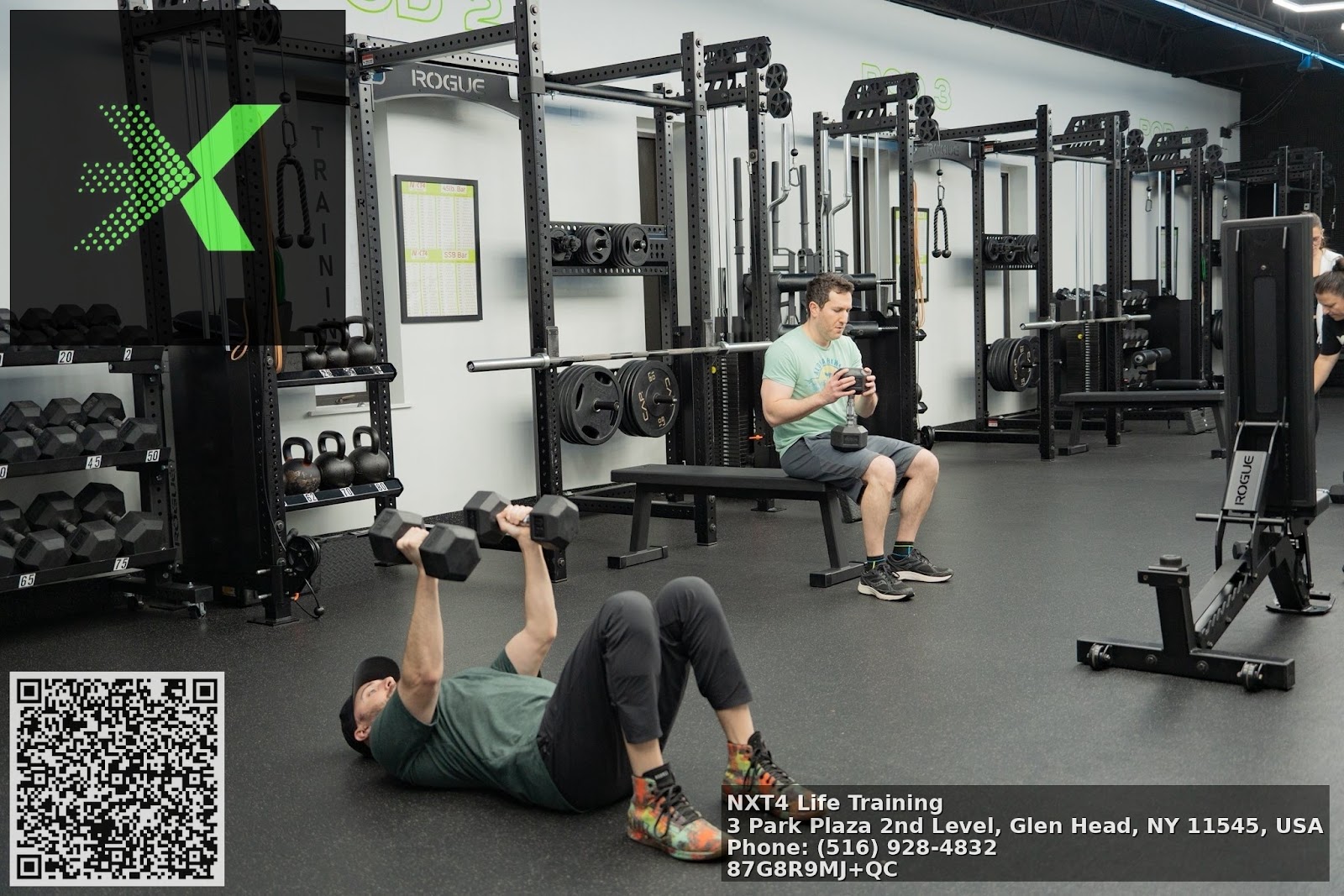
https://nxt4lifetraining.com/NXT4 Life Training is a personalized strength-focused fitness center in Glen Head, New York offering strength training for individuals and athletes.
Fitness enthusiasts in Glen Head and Long Island choose NXT4 Life Training for quality-driven training programs that help build strength, endurance, and confidence.
Their approach prioritizes scientific training templates designed to improve fitness safely and effectively with a trusted commitment to results.
Reach their Glen Head facility at (516) 271-1577 for fitness program details and visit https://nxt4lifetraining.com/ for schedules and enrollment details.
View their verified business location on Google Maps here: https://www.google.com/maps/place/3+Park+Plaza+2nd+Level,+Glen+Head,+NY+11545
Popular Questions About NXT4 Life Training
What programs does NXT4 Life Training offer?
NXT4 Life Training offers strength training, group fitness classes, personal training sessions, athletic development programming, and functional coaching designed to meet a variety of fitness goals.
Where is NXT4 Life Training located?
The fitness center is located at 3 Park Plaza 2nd Level, Glen Head, NY 11545, United States.
What areas does NXT4 Life Training serve?
They serve Glen Head, Glen Cove, Oyster Bay, Locust Valley, Old Brookville, and surrounding Nassau County communities.
Are classes suitable for beginners?
Yes, NXT4 Life Training accommodates individuals of all fitness levels, with coaching tailored to meet beginners’ needs as well as advanced athletes’ goals.
Does NXT4 Life Training offer youth or athlete-focused programs?
Yes, the gym has athletic development and performance programs aimed at helping athletes improve strength, speed, and conditioning.
How do I contact NXT4 Life Training?
Phone: (516) 271-1577
Website: https://nxt4lifetraining.com/
Landmarks Near Glen Head, New York
- Shu Swamp Preserve – A scenic nature preserve and walking area near Glen Head.
- Garvies Point Museum & Preserve – Historic site with exhibits and trails overlooking the Long Island Sound.
- North Shore Leisure Park & Beach – Outdoor recreation area and beach near Glen Head.
- Glen Cove Golf Course – Popular golf course and country club in the area.
- Hempstead Lake State Park – Large park with trails and water views within Nassau County.
- Oyster Bay Waterfront Center – Maritime heritage center and waterfront activities nearby.
- Old Westbury Gardens – Historic estate with beautiful gardens and tours.
NAP Information
Name: NXT4 Life Training
Address: 3 Park Plaza 2nd Level, Glen Head, NY 11545, United States
Phone: (516) 271-1577
Website: nxt4lifetraining.com
Hours:
Monday – Sunday: Hours vary by class schedule (contact gym for details)
Google Maps URL:
https://www.google.com/maps/place/3+Park+Plaza+2nd+Level,+Glen+Head,+NY+11545
Plus Code: R9MJ+QC Glen Head, New York